What is the best SEO strategy for B2B logistics companies?
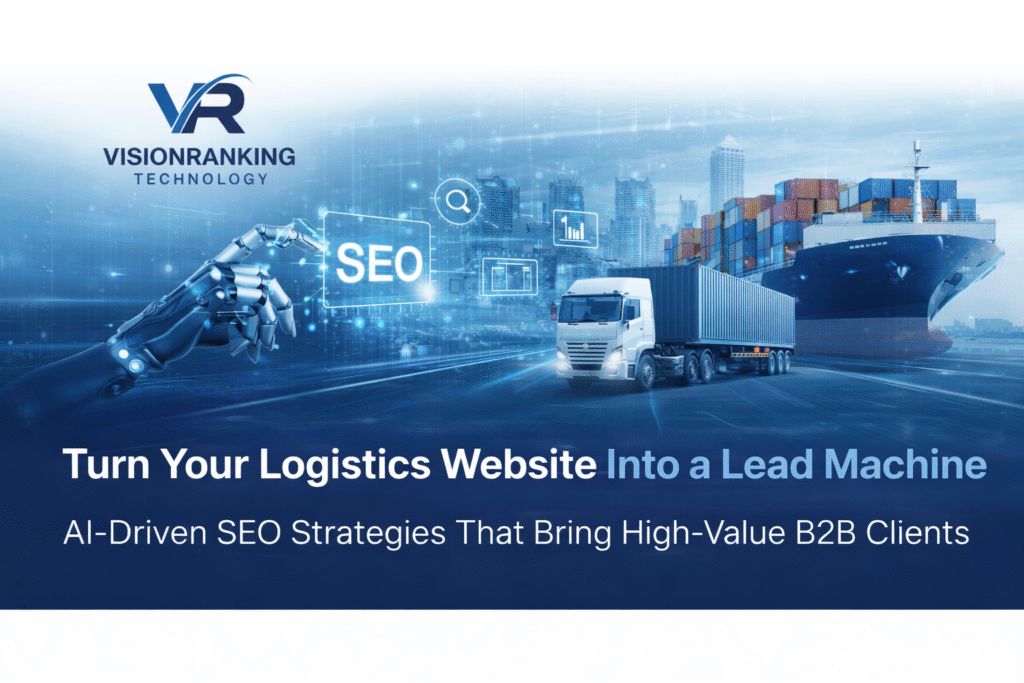
The logistics industry is evolving rapidly, and so is the way businesses search for services. Traditional SEO alone is no longer enough. Today, B2B logistics companies must optimize not only for search engines but also for AI-driven search experiences, voice queries, and intent-based discovery.
If your logistics business is struggling to generate qualified leads online, it is not just about ranking higher. It is about showing up in the right context, answering the right questions, and building trust with decision-makers.
This guide explores the most effective SEO strategy tailored specifically for B2B logistics companies, helping you attract high-value clients and stay ahead in a competitive digital landscape.
Understanding B2B Logistics SEO
B2B logistics SEO is different from typical SEO. You are not targeting casual consumers. Your audience includes supply chain managers, procurement heads, import export businesses, and enterprise decision-makers.
They are searching for:
- Reliable freight partners
- Cost optimization solutions
- Industry-specific logistics services
- Long-term contracts
This means your SEO strategy must focus on high intent, niche-specific, and solution-driven content.
Why SEO Matters More Than Ever for Logistics Companies
Search behavior has changed. Users are now asking detailed questions like:
- “How to reduce shipping costs for bulk imports”
- “Best freight forwarding partner for eCommerce brands”
- “Reliable cold chain logistics provider near me”
Search engines now prioritize context, authority, and relevance, not just keywords.
For logistics companies, SEO helps:
- Generate qualified B2B leads
- Build credibility and trust
- Reduce dependency on paid ads
- Improve long-term ROI
Core Elements of a Winning SEO Strategy
1. Intent-Driven Keyword Research
Forget generic keywords like “logistics company” or “freight services.” These are too broad and highly competitive.
Instead, focus on:
- Long-tail keywords
- Question-based queries
- Industry-specific search terms
Examples:
- “Best 3PL provider for eCommerce brands”
- “How to ship goods internationally from India”
- “Cold storage logistics for pharmaceuticals”
The goal is to match search intent, not just search volume.
2. Topic Clusters and Content Depth
Instead of creating random blog posts, build content clusters around core services.
Example cluster:
Main Topic: Freight Forwarding Services
Supporting Topics:
- How freight forwarding works
- Air vs sea freight comparison
- Customs clearance process
- Cost factors in international shipping
This structure helps search engines understand your expertise and improves rankings across multiple keywords.
3. AI-Optimized Content Structure
Modern SEO is not just about ranking on Google. It is also about appearing in AI-generated answers and search overviews.
To optimize for AI visibility:
- Use clear headings and subheadings
- Answer questions directly
- Include concise summaries
- Add FAQs
- Use structured formatting
Your content should be easy for both humans and AI systems to understand.
4. High-Quality Service Pages
Your service pages are your most important assets.
Each service page should include:
- Clear description of services
- Industries served
- Benefits and outcomes
- Process explanation
- Case studies or examples
- Strong call to action
Avoid thin content. A detailed, informative page builds trust and improves conversion rates.
5. Technical SEO for Performance
A slow or poorly structured website can kill your rankings.
Key technical factors:
- Fast loading speed
- Mobile-friendly design
- Secure HTTPS connection
- Clean URL structure
- Proper indexing
Also, ensure your website is easy to navigate, especially for B2B users who want quick access to information.
6. Authority Building Through Backlinks
In B2B logistics, trust is everything. One of the strongest signals of trust is backlinks from reputable sources.
Focus on:
- Industry directories
- Logistics blogs and publications
- Guest posting
- Partnerships and collaborations
Quality matters more than quantity. A few strong backlinks can outperform hundreds of weak ones.
7. Local SEO for Regional Dominance
Even B2B logistics companies benefit from local SEO.
Optimize for:
- Location-based keywords
- Google Business Profile
- Local directories
- Client reviews
Example searches:
- “logistics company in Delhi”
- “freight forwarder near me”
This helps you capture nearby business opportunities.
8. Conversion-Focused SEO
Traffic alone is not enough. You need conversions.
Improve conversion rates by:
- Adding clear CTAs
- Using trust signals such as certifications and testimonials
- Offering downloadable resources
- Including contact forms and quick inquiry options
Your SEO strategy should align with your sales funnel.
Content Strategy That Works for Logistics Companies
Educational Content
Create blog posts that answer common industry questions. This builds authority and attracts organic traffic.
Examples:
- How to reduce logistics costs
- What is third-party logistics
- How to choose a freight partner
Case Studies
Show real-world results:
- Cost savings achieved
- Delivery time improvements
- Client success stories
Case studies build credibility and help decision-makers trust your services.
Industry Insights
Share trends and updates:
- Supply chain disruptions
- Shipping regulations
- Technology in logistics
This positions your brand as an industry leader.
Role of AI in Modern SEO Strategy
AI is changing how search engines interpret content.
To stay ahead:
- Focus on natural language content
- Answer user queries clearly
- Use structured data where possible
- Keep content updated and relevant
AI rewards content that is helpful, clear, and authoritative.
Common SEO Mistakes to Avoid
- Targeting only high-volume keywords
- Ignoring user intent
- Publishing low-quality content
- Neglecting technical SEO
- Not tracking performance
- Lack of consistency
Avoiding these mistakes can significantly improve your results.
How Vision Ranking Helps Logistics Businesses Grow
At Vision Ranking, we understand the unique challenges of B2B logistics SEO.
Our approach includes:
- Deep keyword and competitor research
- AI-optimized content creation
- Technical SEO improvements
- Authority building strategies
- Conversion-focused optimization
We do not just focus on rankings. We focus on generating real business growth.
Measuring SEO Success
Track these key metrics:
- Organic traffic
- Keyword rankings
- Lead generation
- Conversion rate
- Bounce rate
- Backlink growth
Use tools like analytics platforms to monitor progress and refine your strategy.
Future Trends in Logistics SEO
The future of SEO is shaped by:
- AI-driven search results
- Voice search queries
- Personalized search experiences
- Visual and video content
Logistics companies that adapt early will gain a strong competitive advantage.
Conclusion
The best SEO strategy for B2B logistics companies is not about quick wins. It is about building a strong, sustainable online presence.
By focusing on:
- Intent-driven keywords
- High-quality content
- Technical excellence
- Authority building
- Conversion optimization
You can attract the right audience and turn them into long-term clients.
If you want to scale your logistics business with a results-driven SEO strategy, Vision Ranking is here to help.
Ready to grow your logistics business with SEO? Visit Vision Ranking and start generating high-quality B2B leads today.
FAQs
What is B2B logistics SEO?
B2B logistics SEO is the process of optimizing a logistics company’s website to attract business clients through search engines using targeted keywords, content, and technical improvements.
How long does SEO take for logistics companies?
SEO is a long-term strategy. Initial improvements can be seen within a few months, but consistent growth requires ongoing effort.
Which keywords are best for logistics SEO?
Long-tail and intent-based keywords work best, such as service-specific and industry-focused search terms.
Why is content important for logistics SEO?
Content helps answer user queries, build authority, and improve rankings, making it a key part of any SEO strategy.
Can SEO generate leads for logistics businesses?
Yes, a well-optimized SEO strategy can attract high-quality leads and improve conversion rates significantly.
Do logistics companies need local SEO?
Yes, local SEO helps capture nearby business opportunities and improves visibility in location-based searches.