SEO vs Paid Ads: Which One Brings Long-Term Customers?
In today’s digital marketplace, attracting customers online requires more than simply launching a website. Businesses must actively promote their services and ensure they are visible when potential customers search for solutions.
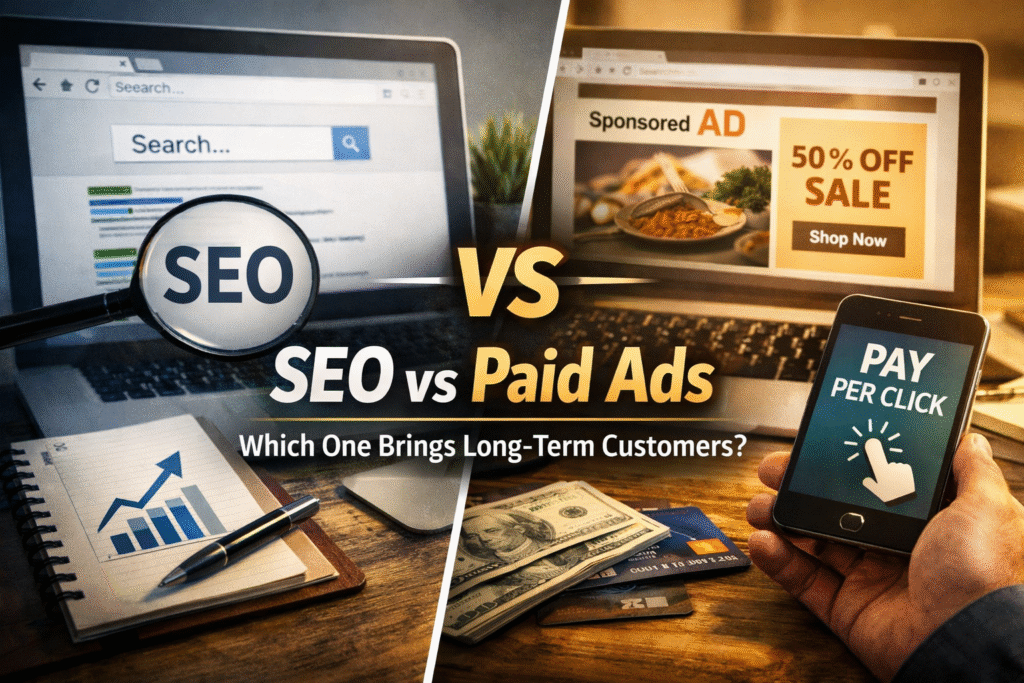
Two of the most common strategies used for online visibility are search engine optimization and paid advertising. Both approaches help businesses reach audiences through search engines and online platforms, but they operate in very different ways.
While paid ads can generate immediate traffic, SEO focuses on building sustainable visibility over time. Understanding the differences between these strategies helps businesses make smarter marketing decisions and allocate resources effectively.
Choosing the right approach often depends on business goals, timelines, and long-term growth plans.
Understanding Search Engine Optimization
Search engine optimization, commonly known as SEO, is the process of improving a website so that it appears higher in organic search results.
Instead of paying for each visitor, businesses invest in optimizing their website content, structure, and performance to meet search engine standards.
Effective SEO involves several key elements, including keyword research, content creation, technical optimization, and backlink development.
When these elements work together, they help search engines recognize the website as a valuable resource for users searching for specific information.
The result is increased organic visibility and consistent website traffic over time.
Understanding Paid Advertising
Paid advertising allows businesses to display ads on search engines and digital platforms by paying for placement.
When a user searches for specific keywords, sponsored ads appear at the top of search results. Businesses pay each time someone clicks on their advertisement.
Paid advertising campaigns can be launched quickly and adjusted based on performance data.
This flexibility makes paid ads an attractive option for companies that want immediate visibility and fast traffic.
However, once the advertising budget stops, the traffic also stops.
Speed of Results: Immediate vs Gradual Growth
One of the biggest differences between SEO and paid advertising is the speed at which results appear.
Paid ads can begin driving traffic almost immediately after a campaign launches. This makes them useful for new product launches, promotions, or short-term marketing campaigns.
SEO, on the other hand, requires patience and consistent effort. Building authority, publishing optimized content, and earning backlinks takes time.
However, once a website begins ranking well in search results, the traffic generated through SEO can continue for months or even years without additional advertising costs.
Cost Efficiency Over Time
While paid advertising can produce quick results, it often requires ongoing investment.
Businesses must continuously allocate budget to maintain their visibility in search results. Competitive industries may require higher advertising costs to remain visible.
SEO typically involves an upfront investment in content creation, technical improvements, and optimization strategies.
Although these efforts take time to deliver results, the long-term return can be significant. Once a website ranks organically, it can attract visitors without paying for each click.
Over time, this makes SEO one of the most cost-effective digital marketing strategies.
Building Trust and Credibility
Customers tend to trust organic search results more than advertisements.
Many users understand that ads appear because businesses pay for them, while organic rankings reflect relevance and authority.
When a website consistently appears in organic search results, it signals credibility and expertise.
SEO therefore helps businesses build stronger brand trust over time.
Content marketing, informative articles, and educational resources further reinforce this authority.
Businesses that invest in SEO often develop reputations as reliable sources of information within their industries.
Traffic Quality and Customer Intent
Another key difference between SEO and paid ads is the type of traffic they generate.
Paid ads often target specific keywords or audience segments. This allows businesses to reach users who are actively searching for particular products or services.
However, some ad clicks may come from users who are simply browsing rather than ready to make a purchase.
SEO traffic typically comes from users who are actively seeking information or solutions related to their needs.
When businesses create content that answers specific questions or solves real problems, they attract highly relevant visitors who are more likely to become long-term customers
Long-Term Value of SEO
SEO is often described as a long-term investment because its benefits accumulate over time.
High-quality content, optimized website structure, and strong backlinks continue generating traffic even months after they are created.
As a website gains authority, it becomes easier to rank for additional keywords and attract larger audiences.
This compounding effect allows businesses to expand their visibility without increasing marketing costs.
Companies that focus on consistent SEO strategies often experience steady growth in website traffic and customer engagement.
When Paid Advertising Is Most Effective
While SEO provides long-term benefits, paid advertising also has an important role in digital marketing strategies.
Paid ads are particularly effective when businesses need quick visibility or want to promote time-sensitive campaigns.
For example, companies launching new products or running seasonal promotions may benefit from immediate traffic generated by paid ads.
Paid campaigns also provide valuable data about which keywords and messages resonate with audiences.
Businesses can use this information to improve both their advertising and SEO strategies.
Combining SEO and Paid Advertising
Rather than choosing between SEO and paid ads, many successful businesses combine both strategies.
Paid advertising delivers immediate visibility and traffic, while SEO builds long-term authority and sustainable growth.
By using both approaches together, businesses can maximize their online presence.
For instance, paid campaigns can attract early traffic while SEO efforts gradually improve organic rankings.
Over time, as SEO becomes stronger, businesses may rely less on paid advertising while maintaining consistent visibility.
Digital marketing agencies such as Vision Ranking often recommend balanced strategies that leverage the strengths of both methods.
Choosing the Right Strategy for Your Business
Selecting the best marketing strategy depends on business goals and available resources.
Businesses seeking rapid exposure may benefit from launching targeted paid campaigns.
Organizations focused on long-term growth often prioritize SEO because it builds sustainable traffic and brand authority.
For many companies, the most effective solution is a combination of both strategies.
By investing in SEO while strategically using paid ads, businesses can achieve both immediate results and lasting visibility.
Conclusion
SEO and paid advertising each offer valuable benefits for businesses seeking online growth. Paid ads provide immediate visibility and fast traffic, making them useful for short-term campaigns and product promotions.
SEO, however, focuses on building long-term authority and consistent organic visibility. By optimizing content, improving website performance, and earning trust from search engines, businesses can attract customers for years to come.
In the evolving digital landscape, companies that balance short-term advertising with long-term SEO strategies often achieve the strongest results.
Investing in sustainable digital marketing not only increases visibility but also builds lasting relationships with customers.
Frequently Asked Questions
What is the main difference between SEO and paid advertising?
SEO focuses on improving organic search rankings, while paid advertising places sponsored ads in search results through paid campaigns.
Which strategy is better for long-term growth?
SEO is generally better for long-term growth because it generates organic traffic without ongoing advertising costs.
Are paid ads useful for new businesses?
Yes. Paid ads can help new businesses gain immediate visibility while their SEO strategy develops.
How long does SEO take to show results?
SEO results usually begin appearing within three to six months, depending on competition and strategy.
Can businesses use SEO and paid ads together?
Yes. Combining both strategies often produces the best results by delivering immediate traffic while building long-term authority.