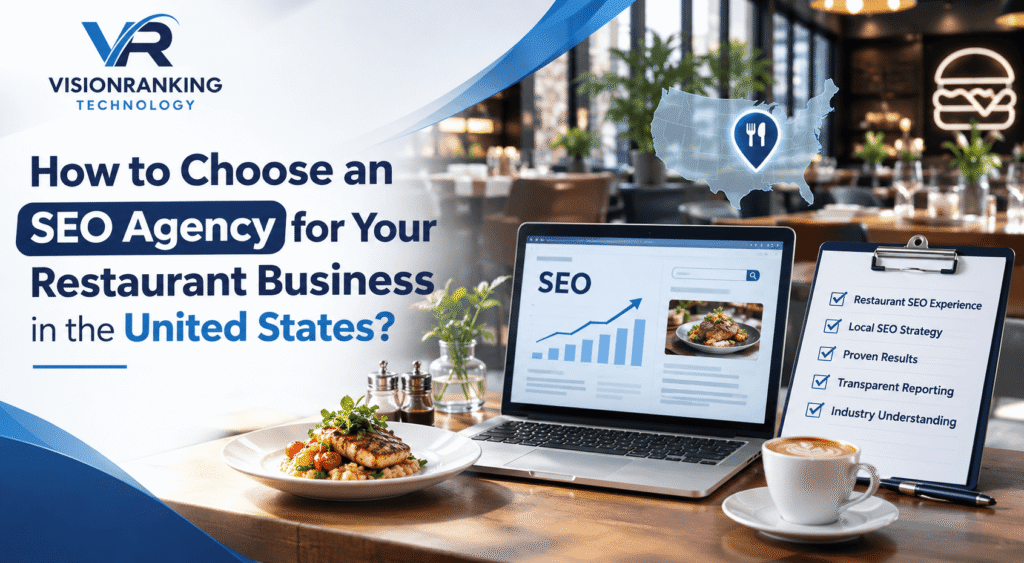
How to Choose an SEO Agency for Your Restaurant Business in the United States?
📌 Key Takeaways
- Choose an Agency with Restaurant SEO Experience: Work with an agency that understands restaurant customer behaviour, cuisine-related searches, local competition, and business requirements.
- Prioritise Local SEO: Google Business Profile optimisation, accurate business information, customer reviews, and location-based keywords help customers find your restaurant.
- Look Beyond Keyword Rankings: Evaluate organic traffic, local visibility, website enquiries, phone calls, and reservation-related actions to understand campaign performance.
- Consider Technical SEO and AI Search: A mobile-friendly website, useful content, structured data, and strong technical foundations support traditional search and AI-powered search experiences.
- Build a Long-Term SEO Partnership: Choose an agency that offers a customised strategy, transparent reporting, consistent communication, and ongoing optimisation to support your restaurant’s growth.
Running a restaurant in the United States requires more than serving good food and providing excellent customer service. Your restaurant also needs to appear where potential customers are searching for places to eat, comparing menus, checking reviews, and looking for nearby dining options.
Today, customers use Google Search, Google Maps, and other online platforms to find restaurants. They search for specific cuisines, nearby cafes, family-friendly dining, lunch specials, delivery options, and restaurants suitable for special occasions. If your restaurant does not appear in relevant search results, potential customers might choose another business.
This is where professional SEO becomes important.
Restaurant SEO helps your business improve its online visibility, attract relevant local searches, and generate more opportunities for reservations, phone calls, direction requests, and website enquiries. However, achieving meaningful results requires a strategy built around your restaurant’s location, cuisine, target customers, competition, and business objectives.
Choosing the right agency is equally important. Some agencies focus primarily on website rankings, while others understand how local search visibility, Google Business Profile optimisation, website experience, content, and customer reviews work together.
When evaluating Restaurant SEO Services in the USA, restaurant owners should look beyond promises of higher rankings. They need an agency that understands the restaurant industry and connects SEO activities with measurable business goals.
In this guide, we explain what to look for when hiring an SEO agency, which services your restaurant needs, common mistakes to avoid, and how the right long-term SEO partnership supports business growth.
If you want to understand how SEO fits into your restaurant’s marketing strategy, explore Vision Ranking’s Restaurant SEO Services.
1. Understand Why Your Restaurant Needs Professional SEO
Before selecting an agency, understand what SEO should accomplish for your restaurant.
A restaurant website serves as an important source of information for potential customers. It helps them explore your menu, understand your offerings, check your location, view photographs, and decide whether your restaurant meets their expectations.
However, having a website does not automatically make your restaurant visible in search results.
Professional SEO improves the website’s ability to appear for relevant searches and helps customers find useful information when making dining decisions.
How Restaurant SEO Supports Business Growth
A well-planned restaurant SEO strategy supports several business objectives:
- Better local visibility: Helps your restaurant appear for relevant searches in your service area.
- More qualified website visitors: Attracts people searching for your cuisine, menu, dining experience, and restaurant location.
- Increased reservation opportunities: Makes it easier for potential customers to find booking information.
- More customer enquiries: Encourages calls, contact form submissions, and direction requests.
- Stronger brand credibility: Builds trust through useful website content, accurate business information, and customer reviews.
- Long-term organic visibility: Develops a sustainable source of website traffic instead of depending entirely on paid advertising.
For example, consider an Italian restaurant in Chicago. Its potential customers might search for Italian restaurants near their location, family dining options, authentic pasta restaurants, or Italian restaurants suitable for business meetings.
An effective SEO strategy helps the business target relevant searches instead of attracting visitors who have little interest in its services.
The important point is to connect search visibility with customer actions. Higher website traffic has limited business value if visitors cannot find the menu, location, reservation details, or contact information.
2. Look for an Agency with Restaurant Industry Experience
Every industry has different customer behaviours and search requirements. Restaurant SEO requires an understanding of local customer intent, cuisine-related searches, menu information, restaurant locations, and dining preferences.
An agency with relevant experience will understand these requirements before recommending a strategy.
When evaluating an agency, look for experience in areas such as:
- Restaurant and cafe website optimisation.
- Local SEO for single-location and multi-location restaurants.
- Google Business Profile optimisation.
- Cuisine-specific keyword research.
- Restaurant menu and service page optimisation.
- Location-based content development.
- Review management strategies.
- Reservation and enquiry conversion optimisation.
Why Industry Understanding Matters
Imagine you operate a Mexican restaurant in Houston.
Your potential customers might search for Mexican restaurants, tacos near me, authentic Mexican food, Mexican catering services, or restaurants offering group dining.
These searches represent different customer requirements. A customer searching for a nearby lunch restaurant might have a different intention from someone researching catering for a corporate event.
An experienced agency understands these differences and develops relevant landing pages and content around your actual business offerings.
During your initial consultation, ask the agency how it approaches restaurant SEO. Its answers should demonstrate an understanding of customer search behaviour, local visibility, and restaurant-related conversion opportunities.
Business Tip: Do not select an agency solely because it claims to work with restaurants. Ask how its proposed strategy will address your restaurant’s specific location, cuisine, customer base, and revenue objectives.
3. Check Whether the Agency Offers Complete Restaurant SEO Services
Restaurant SEO involves several connected activities. An agency that focuses only on keyword placement or blog publishing might overlook important technical and local search requirements.
Before hiring an agency, confirm whether its services cover the following areas.
Essential Services to Look For
| SEO Service | Why Your Restaurant Needs It |
| Keyword Research | Identifies relevant cuisine, service, and location-based searches. |
| On-Page SEO | Improves website pages, headings, titles, descriptions, and content. |
| Local SEO | Improves visibility for relevant searches within your service areas. |
| Google Business Profile | Helps customers find accurate restaurant information on Google. |
| Technical SEO | Identifies crawling, indexing, mobile usability, and website performance issues. |
| Content Marketing | Builds relevant pages and articles around customer search intent. |
| Link Building | Develops website authority through relevant and trustworthy links. |
| Conversion Optimisation | Makes menus, reservations, calls, and contact information easier to access. |
| SEO Reporting | Measures organic performance and business-related actions. |
Why an Integrated Strategy Matters
These services work together.
For example, your restaurant might have a well-optimised Google Business Profile, but its website might contain outdated menu information or lack dedicated pages for important services.
Similarly, your website might receive organic traffic, but visitors might leave because they cannot find reservation details or restaurant timings.
A complete SEO strategy addresses these connected problems instead of treating every activity separately.
When discussing your requirements, ask the agency to explain which services your restaurant needs immediately and which activities should follow later.
You can also explore Vision Ranking’s restaurant SEO solutions to understand how a structured approach supports restaurant visibility and customer acquisition.
4. Evaluate the Agency’s Local SEO and Google Business Profile Expertise
Local SEO is particularly important for restaurants because customers frequently search for dining options within a specific area.
A restaurant in New York does not necessarily need visibility across the entire United States. Its immediate business opportunities might come from nearby neighbourhoods, office districts, residential communities, and popular commercial areas.
Your SEO agency should understand how to target these relevant locations.
What Should an Agency Include in Local SEO?
A professional local SEO strategy should address:
- Google Business Profile setup and optimisation.
- Accurate restaurant name, address, phone number, and opening hours.
- Appropriate primary and secondary business categories.
- Restaurant descriptions and business attributes.
- Menu and website links.
- Relevant local keyword targeting.
- Location-specific website content.
- Customer review monitoring and response guidance.
- Local business citations and relevant directory listings.
- Tracking of calls, direction requests, and website visits.
Google explains that local search results are influenced by relevance, distance, and prominence. Complete business information, customer reviews, and other credibility signals contribute to a business’s local presence.
Why Google Business Profile Optimisation Matters
Imagine a customer searching for a breakfast cafe near their workplace.
The customer wants quick access to information such as:
- Restaurant location.
- Opening hours.
- Customer reviews.
- Photographs.
- Menu details.
- Contact information.
- Directions.
An incomplete or outdated profile creates unnecessary friction.
Your agency should help maintain accurate information and improve the profile’s relevance to your restaurant’s actual offerings.
Important: No agency should promise a guaranteed position in Google Maps. Local rankings depend on several factors, including the searcher’s location and the relevance and prominence of the business.
5. Review Its Keyword Research and Content Strategy
Keyword research determines which searches your restaurant should target through its website and local search presence.
However, selecting keywords based only on search volume is not enough.
Your agency should understand the difference between general food-related searches, restaurant discovery searches, and searches with a stronger intention to visit or order.
Different Types of Restaurant Keywords
Consider an American restaurant operating in Los Angeles.
Its keyword strategy might include:
| Keyword Category | Example Search | Business Purpose |
| Cuisine-Based | American restaurant in Los Angeles | Attracts customers interested in the cuisine. |
| Location-Based | Restaurants in Downtown LA | Targets people searching within a specific area. |
| Service-Based | Private dining restaurants in Los Angeles | Reaches customers interested in private events. |
| Occasion-Based | Restaurants for birthday dinners | Targets customers planning special occasions. |
| Menu-Based | Best burgers near Downtown LA | Attracts customers searching for specific food options. |
| Commercial | Restaurant catering services in Los Angeles | Targets customers researching catering providers. |
These examples illustrate why keyword selection should reflect your restaurant’s actual services and customer requirements.
What Should the Content Strategy Include?
Depending on your business model, the agency might recommend:
- Main restaurant service pages.
- Cuisine-specific landing pages.
- Location-specific pages for eligible restaurant locations.
- Catering and private dining pages.
- Menu-related content.
- Articles answering common customer questions.
- Content highlighting your restaurant’s experience and offerings.
The goal is not to publish as many pages as possible.
Every page should serve a clear purpose, provide useful information, and support a relevant business objective.
For multi-location restaurants, the strategy should also avoid publishing nearly identical location pages with only city names changed.
Ask the agency how it plans to build content around your restaurant’s unique offerings rather than relying on repetitive, generic articles.
6. Assess Technical SEO and Website Experience
A restaurant website needs to work properly across mobile phones, tablets, and desktop computers.
Many customers browse restaurant websites while travelling, commuting, or deciding where to eat. They expect important information to be easy to find.
If the website loads slowly, displays incorrectly, or hides important information, visitors might leave before making a reservation.
Technical Areas Your Agency Should Review
Website Crawling and Indexing
Search engines need to access and understand important website pages. Your agency should identify crawling restrictions, indexing problems, broken links, and unnecessary duplicate URLs.
Mobile Experience
Menus, contact details, location information, and reservation buttons should work properly on smaller screens.
Website Speed
Large food photographs, unnecessary scripts, and poorly configured hosting can affect page loading performance.
Website Structure
Important pages should have clear navigation and internal links. Customers should reach menus, locations, reservations, and contact information without unnecessary steps.
Structured Data
Relevant structured data, such as Restaurant or LocalBusiness markup, helps search engines interpret business information when implemented correctly.
Google’s documentation explains how LocalBusiness structured data communicates details such as business hours, addresses, and restaurant cuisine.
Why Website Experience Influences Business Opportunities
Consider a customer searching for a restaurant that offers private dining.
They visit your website but cannot find information about group bookings, available facilities, or how to contact the restaurant.
Even if your website receives relevant organic traffic, the missing information creates a conversion problem.
Your SEO agency should consider both search engine requirements and the experience of actual visitors.
7. Ask About AI Search, AEO, and GEO Readiness
Search behaviour continues to evolve. Customers increasingly use conversational searches and AI-powered experiences to research businesses, compare options, and find answers.
Alongside traditional Google Search, restaurant owners should understand how their online presence supports visibility across AI-driven search experiences.
These developments make Answer Engine Optimisation (AEO) and Generative Engine Optimisation (GEO) relevant considerations within a broader SEO strategy.
What Does AI Search Readiness Mean for Restaurants?
Your website should communicate important business information clearly.
This includes:
- Restaurant name and location.
- Cuisine and dining options.
- Menu information.
- Opening hours.
- Reservation and ordering options.
- Catering and private dining services.
- Relevant customer questions.
- Consistent business information across online platforms.
For example, someone might ask an AI-powered search platform to recommend a family-friendly Italian restaurant in a particular part of New York.
Clear website content, accurate business details, useful menu information, and a trustworthy online presence help search systems understand what your restaurant offers.
What Should Your SEO Agency Do?
An agency should focus on:
- Creating helpful, accurate, and well-structured website content.
- Improving technical accessibility and indexability.
- Maintaining consistent restaurant information.
- Using relevant structured data.
- Building topical relevance around your restaurant’s services and cuisine.
- Monitoring available organic and AI search visibility data.
Google’s current guidance confirms that foundational SEO practices remain important for AI Overviews and AI Mode. It also states that there are no additional special optimisation requirements for appearing in these experiences.
This distinction matters when evaluating agencies.
Be cautious of providers promising guaranteed AI Overview placements or claiming that a particular AI file or markup automatically secures visibility.
A responsible agency should treat AI search readiness as an extension of good SEO, not as a shortcut around it.
8. Compare Agencies Using Their Strategy, Reporting, and Communication
Two agencies might offer similar SEO services but follow very different working methods.
One might provide a detailed strategy based on your restaurant’s business objectives. Another might offer a standard package with the same activities for every client.
Your decision should depend on the quality of the proposed strategy, communication, transparency, and ability to measure progress.
What Should a Good SEO Proposal Include?
Before signing an agreement, look for:
- Initial website and SEO assessment.
- Keyword research and search intent analysis.
- Competitor landscape analysis without relying on copied strategies.
- Technical SEO recommendations.
- Local SEO requirements.
- Content planning.
- Google Business Profile optimisation.
- Link-building approach.
- Reporting frequency.
- Key performance indicators.
- Communication and approval process.
SEO Reporting: What Should Your Restaurant Track?
Rankings alone do not explain whether your SEO investment supports business growth.
Your reporting should consider multiple performance indicators.
| Performance Metric | What It Helps You Understand |
| Organic Clicks | Visitors reaching your website through organic search. |
| Search Impressions | How often your website appears in search results. |
| Keyword Rankings | Visibility for selected search terms. |
| Organic Landing Pages | Pages attracting search traffic. |
| Google Business Profile Interactions | Customer activity involving your business profile. |
| Website Enquiries | Contact form submissions and other enquiry actions. |
| Phone Calls | Calls generated through measurable website or profile interactions. |
| Reservation Actions | Measurable visits or actions involving booking links. |
Not every restaurant has the same tracking setup. Your agency should explain which actions it can measure accurately and where additional tracking or booking-platform integration is required.
How Often Should You Receive Reports?
Monthly reporting is a practical starting point for reviewing progress and planning upcoming activities.
A useful report should explain:
- What work was completed.
- Which keywords gained or lost visibility.
- How organic traffic changed.
- Which pages performed well.
- What technical issues were identified.
- Which business actions were recorded.
- What the agency plans to prioritise next.
Look for explanations, not simply spreadsheets filled with ranking numbers.
9. Understand the SEO Process Before Hiring an Agency
A reliable SEO agency should follow a structured process. This gives restaurant owners a clear understanding of what happens after onboarding and how the campaign develops.
At Vision Ranking, the approach to SEO focuses on understanding business requirements, identifying opportunities, implementing improvements, and reviewing performance.
Our Restaurant SEO Process
Step 1: Business Understanding and Consultation
The process begins with understanding your restaurant, business model, target customers, locations, cuisine, and marketing objectives.
The agency should also establish whether your priorities involve reservations, takeaway orders, catering enquiries, private dining, or multiple business goals.
Step 2: Website and SEO Audit
An initial audit identifies existing website issues and opportunities.
The assessment typically covers:
- Website structure.
- Technical SEO.
- Existing keyword visibility.
- On-page optimisation.
- Content quality.
- Internal linking.
- Local search presence.
- Google Business Profile.
Step 3: Keyword Research and Strategy Development
The agency identifies relevant primary and secondary keywords based on search intent, business offerings, and target locations.
It then develops a keyword mapping and optimisation plan for important website pages.
Step 4: On-Page and Technical SEO
The team works on approved website recommendations, including page titles, meta descriptions, headings, content improvements, image optimisation, internal links, and technical corrections.
Step 5: Local SEO and Google Business Profile
The strategy addresses business information, profile optimisation, local keyword relevance, review management guidance, and location-related website improvements.
Step 6: Content Development and Authority Building
Relevant service pages and supporting content are developed to address customer searches.
The agency also works on relevant link-building activities to strengthen the website’s authority and online presence.
Step 7: Monitoring and Reporting
Performance is reviewed through available analytics and search data.
The agency evaluates completed activities, identifies new opportunities, and adjusts priorities according to campaign performance.
This process gives restaurant owners a clearer picture of their SEO investment and the work required to improve search visibility.
10. Common Mistakes Restaurant Owners Make When Hiring an SEO Agency
Choosing an SEO agency based on price or impressive sales presentations often leads to disappointing experiences.
Restaurant owners should understand the following mistakes before making a decision.
Choosing the Cheapest SEO Package
Low-cost packages often have limited deliverables or follow a generic approach.
The problem is not necessarily the price. It is whether the proposed work addresses your actual SEO requirements.
A restaurant with several locations, catering services, and private dining facilities might need a different strategy from a small single-location cafe.
Focusing Only on Keyword Rankings
Ranking improvements are useful, but they should connect with meaningful customer actions.
An agency should consider organic traffic, local visibility, enquiries, calls, and reservation-related activity wherever measurable.
Ignoring Google Business Profile
A restaurant might have a well-designed website but an incomplete business profile.
Missing opening hours, outdated photographs, incorrect categories, or inconsistent contact details can create problems for potential customers.
Publishing Generic Blog Content
Publishing articles without a clear content strategy rarely supports strong business objectives.
Restaurant content should address relevant customer requirements and connect with the restaurant’s actual services.
Expecting Immediate Results
SEO requires research, implementation, monitoring, and ongoing improvement.
Expecting a new campaign to generate significant organic growth within a few days creates unrealistic expectations.
Giving an Agency Full Control Without Transparency
Restaurant owners should understand what work is being performed and retain appropriate access to their website, analytics, search accounts, and business listings.
A professional working relationship should involve clear responsibilities and communication.
11. Red Flags to Watch for When Choosing an SEO Agency
Not every agency follows responsible SEO practices. Some promises sound attractive during the sales process but create problems later.
Watch for these warning signs:
| Red Flag | Why It Is a Concern |
| Guaranteed First-Page Rankings | Search rankings are not under an agency’s direct control. |
| Guaranteed Google Maps Position | Local results depend on factors such as relevance, distance, and prominence. |
| Instant Traffic Promises | SEO requires time and consistent implementation. |
| Unclear Backlink Packages | Poor-quality or manipulative links introduce unnecessary risks. |
| No Initial Website Assessment | The strategy might not address your actual website problems. |
| Identical Strategy for Every Client | Different restaurants have different customers and locations. |
| No Regular Reporting | You have limited visibility into campaign progress. |
| No Explanation of Completed Work | It becomes difficult to evaluate the value of the engagement. |
| Long Contracts Without Clear Deliverables | You might not understand what the agency is responsible for. |
Be Careful with Unrealistic Guarantees
A trustworthy agency should explain its approach, deliverables, expected milestones, and measurement methods.
It should also acknowledge that rankings, traffic, and customer enquiries depend on multiple factors beyond its direct control.
Choose transparency over promises.
12. Questions to Ask Before Hiring Restaurant SEO Services in the USA
Your initial consultation is an opportunity to understand how an agency thinks and whether its approach matches your business requirements.
Consider asking these questions before signing an agreement.
1. Have you worked with restaurant or cafe businesses?
Ask about relevant experience and the types of restaurant SEO requirements the agency understands.
2. How will you identify keywords for my restaurant?
The agency should explain how it evaluates location, cuisine, services, search intent, and business priorities.
3. Will you optimise my Google Business Profile?
Confirm whether local profile optimisation is included in the proposed service.
4. What will your initial SEO audit cover?
Ask whether the audit includes technical issues, keyword opportunities, content, local SEO, and website structure.
5. How will you improve my restaurant website’s visibility?
Look for a clear explanation of on-page SEO, technical improvements, local optimisation, and content development.
6. Do you provide AI search optimisation?
Ask how the agency approaches AI Overviews, conversational search, AEO, and GEO without making unrealistic visibility promises.
7. How will you measure campaign performance?
The agency should explain its reporting methods and the difference between search visibility and actual customer actions.
8. How often will I receive updates?
Confirm reporting frequency, communication channels, and who will handle your account.
9. Who owns the website and analytics accounts?
You should retain appropriate ownership and administrative access to your business assets.
10. What is included in the monthly SEO service?
Request a clear breakdown of deliverables, responsibilities, and additional costs.
The answers will help you evaluate whether an agency offers a genuine SEO strategy or simply sells a standard monthly package.
13. Which Restaurants Should Invest in Professional SEO?
Professional SEO is relevant to different types of food and hospitality businesses across the United States.
However, the strategy should reflect the business model and customer acquisition requirements.
Independent Restaurants
Independent restaurants often depend on customers within nearby communities.
Local SEO, Google Business Profile optimisation, cuisine-related keywords, and location-specific content help improve their online presence.
Cafes and Coffee Shops
Cafes attract customers searching for coffee shops, breakfast options, brunch locations, and places to work or meet.
A focused local SEO strategy helps communicate the cafe’s offerings and location.
Multi-Location Restaurant Brands
Restaurant chains need consistent brand information across multiple locations.
Each location requires accurate details and relevant local content without unnecessary duplication.
Fine Dining Restaurants
Fine dining businesses often target customers looking for premium dining experiences, special occasions, tasting menus, and reservations.
Their SEO strategy should communicate their cuisine, dining experience, menu, and booking information clearly.
Restaurants Offering Catering and Private Events
These businesses often target customers with specific commercial requirements.
Dedicated catering and private event pages help communicate service details and attract relevant enquiries.
New Restaurant Businesses
New restaurants need to establish their online presence and make essential business information accessible.
SEO planning during website development helps create a stronger foundation for future organic visibility.
14. What Business Benefits Should You Expect from Professional Restaurant SEO?
A restaurant SEO campaign should support measurable business objectives rather than focus exclusively on search engine activity.
The actual results depend on factors such as your website’s current condition, local competition, restaurant location, budget, service quality, and consistency of implementation.
Here are some of the important business benefits.
Increased Local Brand Visibility
Your restaurant has more opportunities to appear when potential customers search for relevant cuisines, services, and dining options.
More Relevant Website Traffic
Targeting appropriate keywords helps attract people who are interested in your restaurant’s actual offerings.
Better Customer Discovery
An optimised website and business profile make it easier for customers to find menus, contact details, opening hours, and location information.
More Reservation and Enquiry Opportunities
Clear calls to action and accessible booking information help visitors take the next step.
Stronger Online Credibility
Consistent business information, useful content, authentic customer feedback, and a well-maintained online presence support customer confidence.
Long-Term Organic Marketing Value
Unlike campaigns that depend entirely on continuous advertising expenditure, SEO develops organic visibility through ongoing improvements to your website and online presence.
However, SEO should be viewed as one part of a broader restaurant marketing strategy. It works alongside customer service, food quality, pricing, reputation management, social media, and other acquisition channels.
15. Why Choose Vision Ranking for Restaurant SEO Services in the USA?
Choosing an SEO agency is a long-term business decision. You need a partner that understands your objectives, communicates clearly, and develops a strategy around your restaurant’s requirements.
Vision Ranking provides SEO solutions designed to improve business visibility, strengthen organic search presence, and support qualified customer acquisition.
Our approach considers the relationship between traditional SEO, local search, website performance, content, and evolving AI-powered search experiences.
Business-Focused SEO Strategy
We focus on understanding your restaurant’s services, target locations, customer requirements, and marketing priorities before recommending SEO activities.
Comprehensive SEO Support
Our approach covers important areas of SEO, including:
- Keyword research and mapping.
- Website SEO audits.
- On-page SEO.
- Technical SEO.
- Local SEO.
- Google Business Profile optimisation.
- Content development.
- Internal linking.
- Link-building activities.
- SEO performance monitoring.
Local and National Search Understanding
Restaurant businesses have different geographic requirements.
A single-location cafe might prioritise nearby customers, while a restaurant brand operating across multiple cities needs a location-based strategy.
Our SEO planning considers these differences when developing optimisation recommendations.
AI Search and Organic Visibility
We also consider how your website communicates information to traditional search engines and AI-powered search experiences.
Our approach prioritises useful content, clear website structure, technical accessibility, and accurate business information.
Transparent Communication
You should understand what your SEO campaign includes, which activities have been completed, and what the next priorities are.
We focus on clear communication and performance reporting to support informed business decisions.
A Long-Term Growth Partnership
Restaurant SEO requires ongoing attention.
Search trends, customer expectations, website requirements, and local competition continue to change.
Vision Ranking focuses on developing a long-term SEO strategy that adapts to your business requirements instead of relying on short-term ranking promises.
Want to understand what your restaurant needs to improve its online visibility?
Explore Restaurant SEO Services by Vision Ranking or contact our team to discuss your requirements.
Conclusion: Choose an SEO Partner That Understands Your Restaurant’s Business Goals
Choosing the right SEO agency requires more than comparing monthly packages or checking keyword ranking promises.
You need an agency that understands restaurant customer behaviour, local search requirements, website optimisation, content strategy, and the importance of converting website visitors into potential customers.
Before making a decision, evaluate the agency’s industry understanding, technical capabilities, local SEO experience, reporting process, communication, and long-term approach.
The right Restaurant SEO Services in the USA should support your restaurant’s visibility while aligning with its actual business objectives.
At Vision Ranking, we focus on building structured SEO strategies that help restaurant businesses strengthen their online presence and attract relevant search opportunities.
Whether you operate an independent restaurant, a cafe, a fine dining establishment, or a multi-location restaurant brand, our team is ready to understand your requirements and discuss an appropriate SEO strategy.
Ready to improve your restaurant’s online visibility?
- Explore Our Restaurant SEO Services
- Request a Free SEO Audit.
- Book a Free Consultation with Vision Ranking.
Let’s discuss how a structured SEO strategy can support your restaurant’s long-term growth.
Frequently Asked Questions About Restaurant SEO Services in the USA
1. What are Restaurant SEO Services in the USA?
Restaurant SEO Services in the USA involve optimising restaurant websites and online business profiles to improve visibility in relevant Google Search and Google Maps results. These services include keyword research, on-page SEO, technical SEO, local SEO, content development, and Google Business Profile optimisation.
2. How long does restaurant SEO take to show results?
SEO timelines depend on the website’s existing condition, local competition, location, and optimisation requirements. Some improvements might become visible earlier, while stronger organic growth generally requires consistent work over several months. An agency should establish realistic milestones after reviewing your website.
3. How much do Restaurant SEO Services cost in the USA?
The cost depends on the restaurant’s location, number of business locations, website condition, competition, and required services. A single-location cafe generally has different SEO requirements from a restaurant chain operating across multiple states. Request a customised proposal based on your business objectives.
4. Why does my restaurant need local SEO?
Local SEO helps customers find your restaurant when searching for nearby dining options, specific cuisines, and relevant restaurant services. It also supports your Google Business Profile visibility and helps potential customers access important business information.
5. Is Google Business Profile optimisation included in restaurant SEO?
Google Business Profile optimisation is an important part of restaurant local SEO. It involves maintaining accurate business information, selecting appropriate categories, adding relevant photographs, managing customer feedback, and improving the connection between your website and business profile.
6. Can SEO help my restaurant get more reservations?
SEO helps attract potential customers who are searching for relevant restaurants and dining experiences. When combined with clear reservation information, accessible booking links, and an effective website experience, it supports more opportunities for reservations. Actual bookings depend on customer preferences and other business factors.
7. Does restaurant SEO include Google AI Overviews and AI search?
A modern SEO strategy should consider AI-powered search experiences alongside traditional organic search. This involves creating helpful website content, maintaining accurate business information, improving technical accessibility, and using relevant structured data. However, no agency can guarantee inclusion in Google AI Overviews or other AI-generated results.
8. Should a restaurant hire a local SEO agency or a national SEO agency?
The decision depends on your business requirements. A local agency might offer geographic familiarity, while a national agency might provide broader SEO capabilities and experience across different markets. Evaluate the agency’s restaurant industry understanding, service coverage, communication, and proposed strategy before hiring.
9. How do I know whether my restaurant SEO campaign is working?
Review organic traffic, search impressions, keyword visibility, Google Business Profile interactions, website enquiries, phone calls, and reservation-related actions. Compare performance over consistent reporting periods and evaluate whether the campaign is attracting relevant customers.