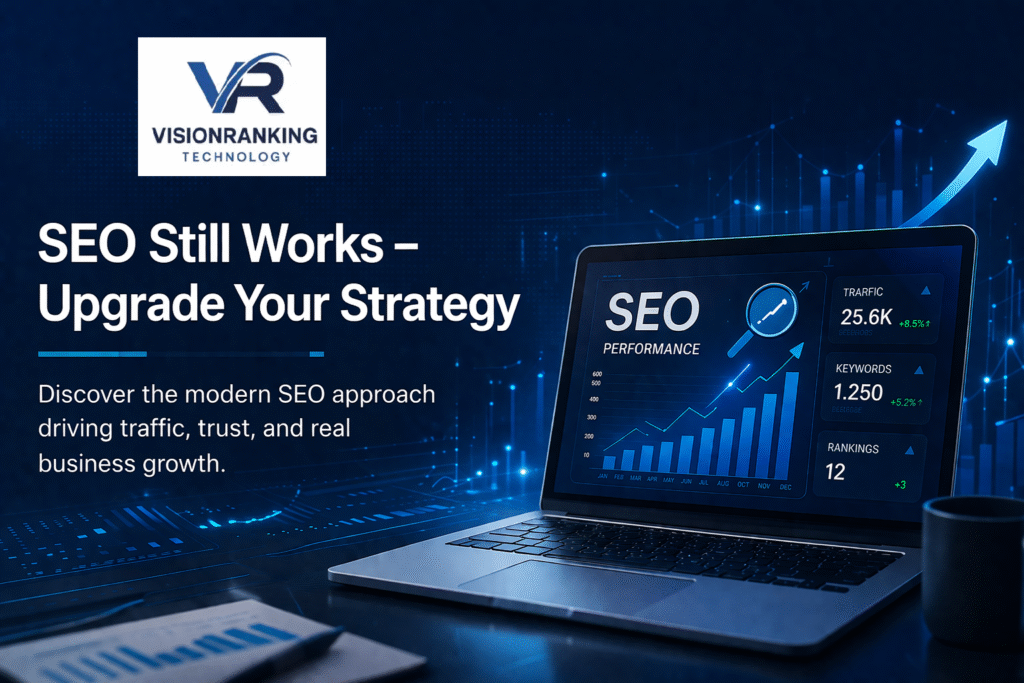
SEO Isn’t Dead – Your Strategy Just Needs an Upgrade
The Biggest Myth in Digital Marketing
Every few years, a familiar headline appears:
“SEO is dead.”
Business owners hear it. Marketers debate it. Companies start shifting budgets away from organic growth.
Yet something interesting keeps happening – businesses that truly understand SEO continue dominating Google search results, generating consistent traffic, and attracting high-quality leads without relying entirely on paid ads.
So what’s really happening?
SEO isn’t dying.
Bad SEO strategies are.
The digital landscape has changed dramatically. Google is smarter, users are more selective, and competition is stronger than ever. What worked five years ago simply doesn’t work today.
This blog will show you why SEO still matters – and how upgrading your strategy can transform your business growth.
Why People Think SEO Is Dead
Many businesses feel frustrated because their rankings drop or traffic slows. Naturally, they assume SEO no longer works.
But the real reasons are different.
1. Outdated Keyword Stuffing
Earlier SEO focused heavily on repeating keywords. Today, Google prioritizes meaning, context, and usefulness instead of repetition.
2. Low-Quality Content
Mass-produced articles created only for ranking no longer perform well. Google now rewards helpful, experience-driven content.
3. Ignoring User Experience
Slow websites, poor mobile design, and confusing navigation push users away — and rankings drop with them.
4. Algorithm Evolution
Google updates constantly to improve search quality. Businesses that don’t adapt fall behind.
SEO didn’t fail.
Strategies stopped evolving.
How SEO Has Actually Evolved
Modern SEO is no longer just technical optimization. It has become a complete digital growth system.
Today, SEO combines:
- User psychology
- Content quality
- Website performance
- Brand authority
- Search intent understanding
- Trust signals
Google’s goal is simple:
Show users the most helpful and reliable result — not the most optimized page.
Businesses that understand this principle succeed consistently.
The Shift From Search Engines to Search Experience
Old SEO focused on ranking pages.
Modern SEO focuses on helping people.
Google evaluates:
- Does the page answer the user’s question?
- Is the information trustworthy?
- Is the website easy to use?
- Do visitors stay and engage?
If users benefit, rankings follow naturally.
This is why experience-driven content now wins over technical tricks.
Search Intent: The Core of Modern SEO
One of the biggest upgrades in SEO strategy is understanding search intent.
Users search with different goals:
Informational Intent
Learning something new.
Looking for a specific brand or website.
Commercial Intent
Researching before purchasing.
Transactional Intent
Ready to buy or contact.
Businesses that match content with intentsee higher rankings and better conversions.
SEO success today is less about keywords and more about understanding people.
Why Content Still Rules (But Differently)
You’ve heard “content is king.”
Today, the truth is deeper:
Helpful content is king.
Modern content must:
- Solve real problems
- Provide clear answers
- Build trust
- Demonstrate expertise
- Keep readers engaged
Google now measures how users interact with your content – not just what words appear on the page.
Long-form, insightful blogs often outperform short promotional articles because they create value.
Technical SEO Still Matters – But Quietly
While content attracts visitors, technical SEO ensures search engines understand your website.
Key factors include:
- Fast loading speed
- Mobile optimization
- Secure HTTPS connection
- Clean site structure
- Proper indexing
Technical SEO works behind the scenes like a strong foundation supporting a building.
Without it, even great content struggles.
The Role of Authority and Trust
Google increasingly evaluates credibility.
Websites rank higher when they demonstrate:
- Industry expertise
- Consistent publishing
- Quality backlinks
- Positive user engagement
- Brand reputation
SEO is now closely connected to branding.
Companies that build trust naturally gain visibility.
AI and SEO: Opportunity, Not Threat
AI has transformed how content is created and searched.
However, AI hasn’t replaced SEO – it has raised the standard.
Google now prioritizes:
- Human insight
- Real experience
- Authentic perspectives
Businesses using AI only for mass content creation often fail, while those combining AI tools with human expertise thrive.
The future belongs to human-guided, AI-enhanced SEO.
Common SEO Mistakes Businesses Still Make
Many companies unknowingly hurt their rankings.
Chasing Shortcuts
Buying backlinks or copying competitors rarely works long term.
Publishing Without Strategy
Random blog posts don’t build authority.
Ignoring Analytics
Data reveals what users actually want.
Expecting Instant Results
SEO is a long-term investment, not an overnight solution.
What a Modern SEO Strategy Looks Like
A successful SEO approach today includes:
1. Audience Research
Understanding customer problems deeply.
2. Intent-Driven Content
Creating content aligned with search goals.
3. Website Optimization
Improving performance and usability.
4. Authority Building
Publishing expert insights consistently.
5. Continuous Improvement
Analyzing and updating content regularly.
SEO is no longer a one-time task – it’s an ongoing growth system.
Why SEO Still Delivers the Highest ROI
Unlike paid ads that stop when budgets end, SEO builds long-term visibility.
Benefits include:
- Sustainable traffic
- Higher trust
- Better lead quality
- Reduced advertising costs
- Compounding growth over time
Businesses investing in modern SEO create digital assets that generate results for years.
SEO + Branding = Long-Term Success
Today’s winning brands combine:
- Strong storytelling
- Valuable content
- Optimized websites
- Consistent messaging
SEO amplifies brand visibility while branding increases click-through rates.
Together, they create unstoppable growth.
How Businesses Should Upgrade Their SEO Today
Start with these steps:
- Audit existing content.
- Focus on user problems, not keywords.
- Improve website speed and mobile design.
- Publish expert-driven blogs consistently.
- Track performance and refine strategy.
Small improvements compound into major ranking gains.
The Future of SEO
SEO will continue evolving toward:
- Voice search optimization
- AI-assisted search results
- Personalized search experiences
- Experience-focused ranking signals
But one thing will remain constant:
Google rewards value.
Businesses that genuinely help users will always win.
Conclusion: SEO Isn’t Dead – It’s Smarter
SEO hasn’t disappeared.
It has matured.
The era of shortcuts is over, replaced by strategy, quality, and authenticity.
Businesses struggling with rankings don’t need to abandon SEO – they need to upgrade their approach.
When done correctly, SEO becomes more than marketing.
It becomes a long-term growth engine.
FAQ
1. Is SEO still effective in 2026?
Yes. Modern SEO remains one of the most powerful ways to generate organic traffic and long-term business growth.
2. Why do some businesses fail with SEO?
Most failures come from outdated strategies, inconsistent content, or ignoring user experience.
3. How long does SEO take to show results?
Typically 3–6 months for noticeable improvements, depending on competition and strategy quality.
4. Is AI replacing SEO?
No. AI enhances SEO but human expertise and strategy remain essential.
5. Should small businesses invest in SEO?
Absolutely. SEO helps small businesses compete with larger brands through organic visibility.
Ready to stop guessing and start growing?
Upgrade your SEO strategy with data-driven insights and modern optimization techniques that bring real results. Partner with experts who understand today’s search landscape and turn visibility into measurable business success.