How to optimize content for AI-driven search results?
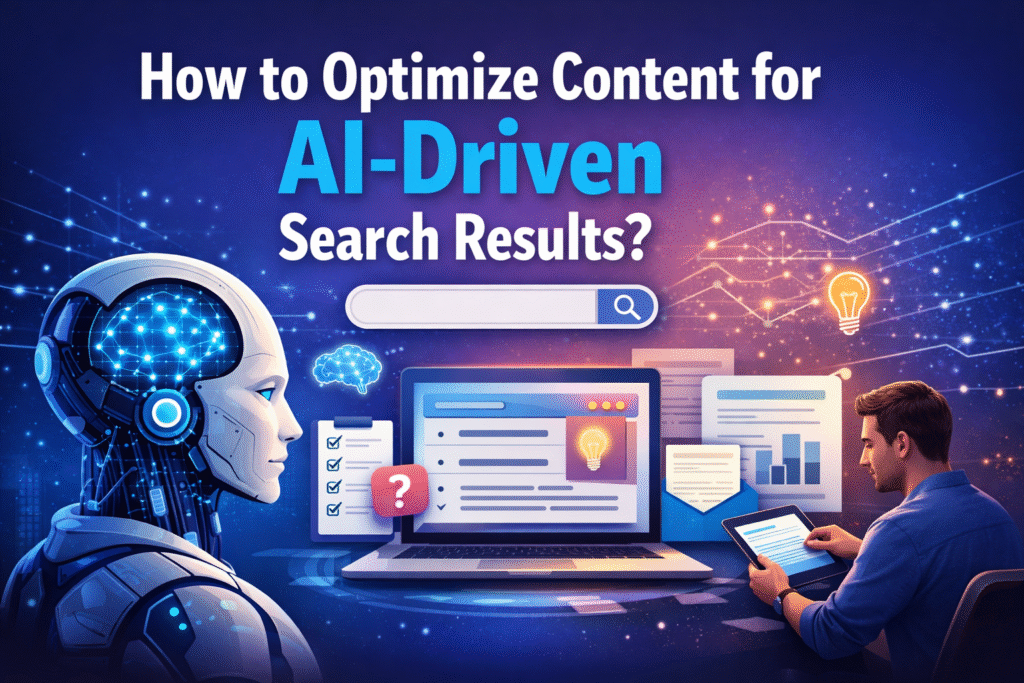
Search is no longer just about keywords and links. With the rapid adoption of AI-driven search systems, search engines now focus on understanding intent, context, and usefulness at a much deeper level. Instead of simply matching words, AI evaluates how well content answers real questions, how trustworthy it feels, and how clearly it is structured.
For businesses that want long-term visibility, especially service based brands like Vision Ranking, adapting content for AI-driven search is no longer optional. It is essential. At Vision Ranking, we work closely with businesses to align content strategies with how modern AI-powered search engines analyze and rank information.
In this in-depth guide, you will learn how to optimize content for AI-driven search results in a practical, human-first way that improves visibility, engagement, and authority.
Understanding AI-driven search and how it works
AI-driven search systems rely on machine learning, natural language processing, and semantic analysis. Their main goal is to provide users with the most accurate and helpful answers rather than a list of pages stuffed with keywords.
Key characteristics of AI-driven search include:
- Understanding user intent rather than exact keywords
- Evaluating content quality, clarity, and depth
- Identifying topical authority across multiple pages
- Prioritizing structured, well-organized information
- Rewarding content that solves problems clearly
This shift means content must be written for people first, while still being optimized in a way that AI can easily interpret.
Why traditional SEO content is no longer enough
In the past, SEO success often depended on keyword density, backlinks, and technical tweaks. While these factors still matter, they are no longer enough on their own.
AI-driven search has reduced the effectiveness of:
- Keyword stuffing
- Thin or repetitive content
- Pages written only for rankings
- Over-optimized anchor text
Instead, AI favors content that demonstrates experience, expertise, relevance, and trust. This is where modern content optimization strategies come into play.
Focus on search intent, not just keywords
Identify real user questions
AI-driven search systems excel at understanding questions. Your content should be built around what users actually want to know.
Instead of targeting only short keywords, focus on:
- How-to queries
- Problem-based searches
- Comparison questions
- Informational queries
For example, rather than writing only about “content optimization,” expand into topics like how to structure content for AI search or why AI prefers certain formats.
Match content depth with intent
Different search intents require different content depth:
- Informational intent needs detailed explanations
- Navigational intent needs clarity and simplicity
- Commercial intent needs comparisons and trust signals
Aligning your content depth with intent improves both user satisfaction and AI interpretation.
AI-driven search values topical authority more than isolated pages. This means covering a subject comprehensively across multiple interconnected pages.
What are topic clusters
A topic cluster includes:
- One main pillar page covering a broad topic
- Supporting articles that explore subtopics in detail
- Internal links connecting all related content
For example, Vision Ranking structures content around core SEO themes and supports them with detailed guides, FAQs, and practical insights.
Benefits of topic clusters
- Improved semantic relevance
- Better internal linking structure
- Stronger authority signals for AI systems
- Higher chances of ranking for multiple related queries
Write naturally using conversational language
AI-driven search understands natural language better than ever. Content that sounds robotic or overly optimized is less effective.
Best practices for natural writing
- Use clear, simple sentences
- Write as if explaining to a real person
- Avoid unnecessary jargon
- Answer questions directly
Conversational content improves readability and helps AI extract meaning more accurately.
Optimize content structure for AI understanding
Use clear headings and subheadings
AI uses headings to understand the hierarchy and flow of information. A clear structure helps both users and search systems.
Best practices include:
- One clear main heading
- Logical subheadings that reflect user questions
- Consistent formatting throughout the page
Keep paragraphs focused
Short, focused paragraphs improve comprehension. Each paragraph should cover one idea clearly.
Avoid large text blocks that mix multiple concepts.
Instead of repeating the same keyword, include related phrases and concepts naturally.
For example, content optimization for AI-driven search may include terms like:
- Search intent
- Natural language processing
- Semantic relevance
- Content quality
- User experience
This helps AI understand the topic context without forcing keyword repetition.
Use internal linking strategically
Internal links guide AI through your website and help define relationships between pages.
Best internal linking practices
- Link to relevant supporting content
- Use descriptive anchor text
- Avoid excessive linking in one section
- Keep navigation logical
At Vision Ranking, internal linking is used to reinforce expertise across service pages, blogs, and guides, improving overall site authority.
Optimize for featured answers and AI summaries
AI-driven search often pulls concise answers directly into search results.
How to optimize for this
- Answer key questions early in the content
- Use bullet points for clear explanations
- Include short summary sections
- Structure FAQs clearly
This increases the chance of your content being selected for AI-generated summaries.
Demonstrate experience and expertise clearly
AI systems evaluate credibility by analyzing content signals that show real expertise.
Ways to show expertise
- Share practical insights and real examples
- Explain processes step by step
- Avoid vague or generic statements
- Reference your professional experience naturally
Mentioning your business expertise, like how Vision Ranking helps brands improve search visibility, reinforces trust without sounding promotional.
Optimize readability and user engagement
User engagement signals help AI assess content usefulness.
Improve engagement by
- Writing scannable content
- Using lists and subheadings
- Adding examples and explanations
- Keeping a logical flow
When users spend more time reading, AI interprets the content as valuable.
Make content accessible and inclusive
AI-driven search increasingly values accessibility.
Best practices include:
- Clear language
- Logical reading order
- Descriptive headings
- Simple sentence structures
Accessible content benefits all users and improves AI interpretation.
Keep content updated and relevant
AI prefers content that remains accurate and useful over time.
Maintenance tips
- Refresh examples and explanations
- Add new insights when trends shift
- Expand sections based on user feedback
- Remove outdated information
Regular updates signal content freshness and reliability.
Optimize metadata without overdoing it
Titles and descriptions still matter, but they should feel natural.
Best practices
- Write titles as real questions or solutions
- Use meta descriptions to explain value
- Avoid keyword stuffing
Your title should clearly communicate what the reader will learn.
Align content with your brand voice
AI recognizes consistency across content.
For businesses like Vision Ranking, maintaining a professional, helpful, and authoritative tone across all pages strengthens brand signals and trust.
Consistency helps AI associate your brand with expertise in your niche.
Measure performance beyond rankings
AI-driven search success is not only about rankings.
Track metrics such as:
- Engagement time
- Scroll depth
- Conversion actions
- User feedback
These signals help refine content strategies for better AI alignment.
Common mistakes to avoid in AI-focused content optimization
- Writing only for algorithms
- Ignoring user intent
- Overusing keywords
- Publishing thin content
- Neglecting internal linking
Avoiding these mistakes ensures long-term performance.
How Vision Ranking approaches AI-driven content optimization
At Vision Ranking, content optimization is built around real users and intelligent search systems. Instead of shortcuts, the focus is on clarity, depth, and relevance.
Our approach includes:
- Intent-focused content planning
- Topic cluster development
- Semantic optimization
- Human-first writing
- Continuous performance analysis
Frequently Asked Questions
What is AI-driven search optimization?
AI-driven search optimization focuses on creating content that AI-powered search systems can understand, evaluate, and trust. It emphasizes intent, quality, structure, and usefulness rather than keyword repetition.
How is AI-driven SEO different from traditional SEO?
Traditional SEO focused heavily on keywords and links. AI-driven SEO prioritizes intent, semantic relevance, content depth, and user experience.
Does keyword research still matter?
Yes, but it should focus on topics and questions rather than single keywords. Keywords guide content themes, not content structure.
How long should AI-optimized content be?
There is no fixed length. Content should be as long as needed to fully answer the user’s question clearly and accurately.
Can small businesses compete in AI-driven search?
Yes. By creating focused, high-quality content and demonstrating expertise, small businesses can perform very well in AI-driven search results.
How often should content be updated?
Content should be reviewed regularly and updated whenever information becomes outdated or when new insights improve clarity.
Does internal linking really help AI search?
Yes. Internal linking helps AI understand content relationships and strengthens topical authority across your website.
Final thoughts
Optimizing content for AI-driven search results requires a shift in mindset. Success comes from clarity, usefulness, and genuine expertise rather than shortcuts.
By focusing on intent, structure, semantic relevance, and user experience, businesses can future-proof their content strategies. With the right approach, AI-driven search becomes an opportunity rather than a challenge.
For businesses looking to implement these strategies effectively, Vision Ranking provides expert guidance and proven content optimization solutions designed for the evolving search landscape.